Icelandic Volcano Area Tour - Grindavík Town, Reykjanes Lava Fields and Hot Springs
📍 Reykjavík, Iceland

4.9 ( 1,298 reviews)
From
Duration7 hours
FitnessEasy
CancellationFree cancellation 24h before start time
🔒Secure payment
✅Instant confirmation
Overview
What you will be doing
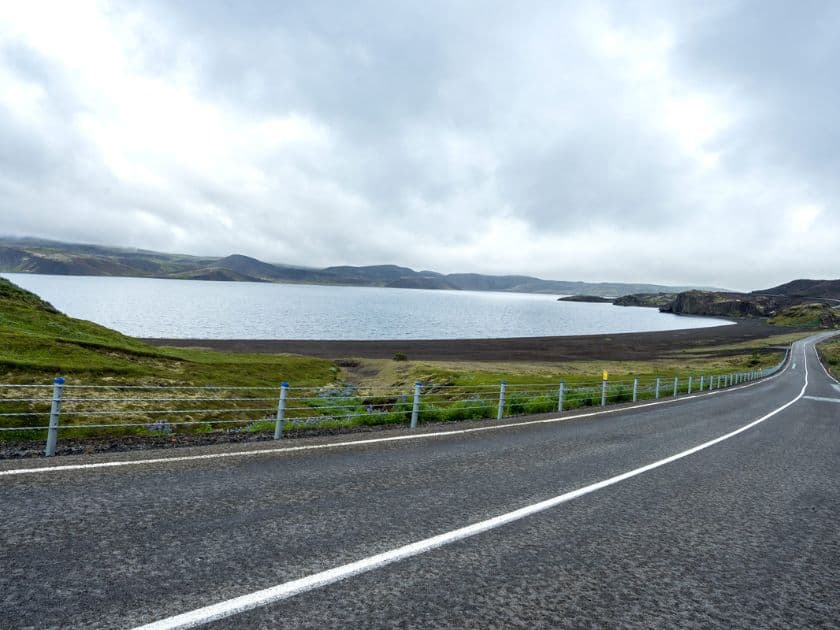
The Lake Kleifarvatn
Kleifarvatn is the largest lake on the Reykjanes peninsula and a sight to behold. The road along the lake is probably one of the most underrated tourist roads in the country, which hugs the lake’s shore. The tall mountains on the other side make the drive alongside the lake nearly as fun as stopping to admire it from various vantage points. Fun Fact: In the year 2000, Kleifarvatn lost 20% of its water when a fissure opened after an earthquake. The water drained into the nearby North Atlantic Ocean through a subterranean channel. It has since recovered almost entirely.
The Geothermal Area Seltún
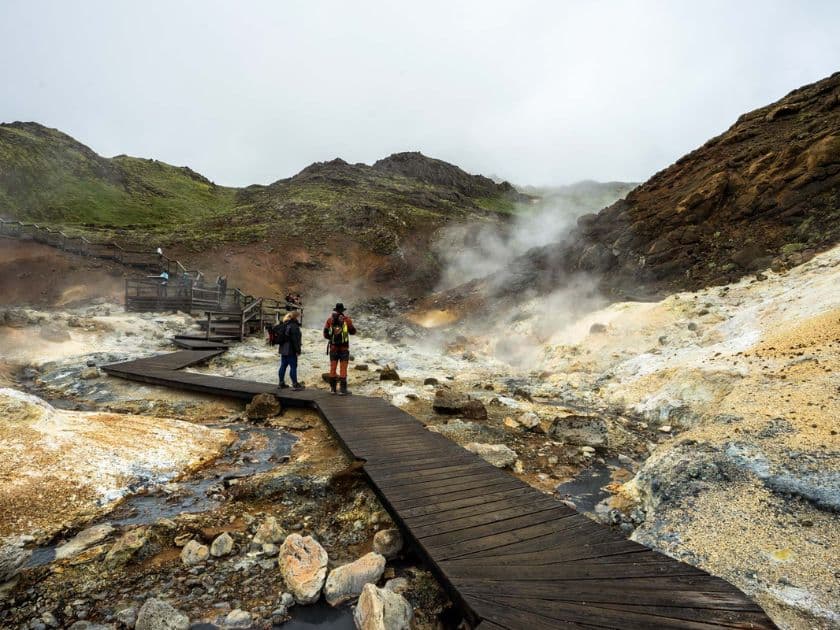
On the fissure zone between two tectonic plates running across Iceland lies the large geothermal area of Krýsuvík. Within this area is Seltún, a geothermal field where volcanic fumaroles, mud pots, and hot springs have formed. The result of the geothermal activity is a landscape seemingly painted bright yellow, red, and green—a result of sulfur interacting with other minerals in the soil.
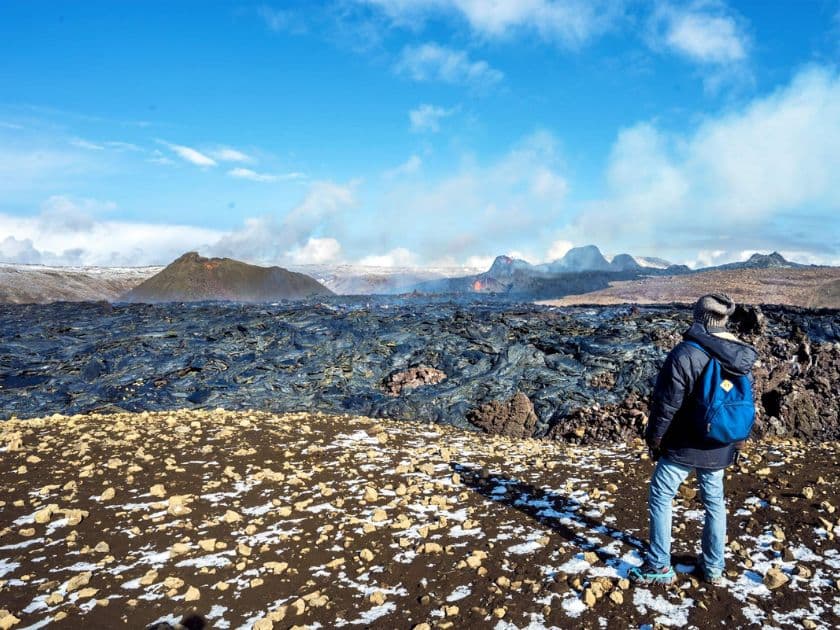
Nátthagi lava field
You will see the most recent lava fields created by the volcano at Fagradalsfjall. This is the youngest land in Iceland and can sometimes be alive with molten rock and lava.
Grindavík, the Fishing Village
Grindavík has faced significant natural disasters in recent months due to ongoing volcanic activity. Since late 2023, a series of powerful earthquakes and eruptions have forced evacuations, damaged infrastructure, and reshaped the landscape. The town remains largely abandoned, with roads split, homes destroyed, and the ground continuing to shift. Despite the devastation, scientists closely monitor the region, and emergency responders work tirelessly to manage the situation. This unfolding event highlights Iceland’s ever-changing nature and the raw power of the forces beneath our feet.
The Largest Mud Pool in Iceland, Gunnuhver
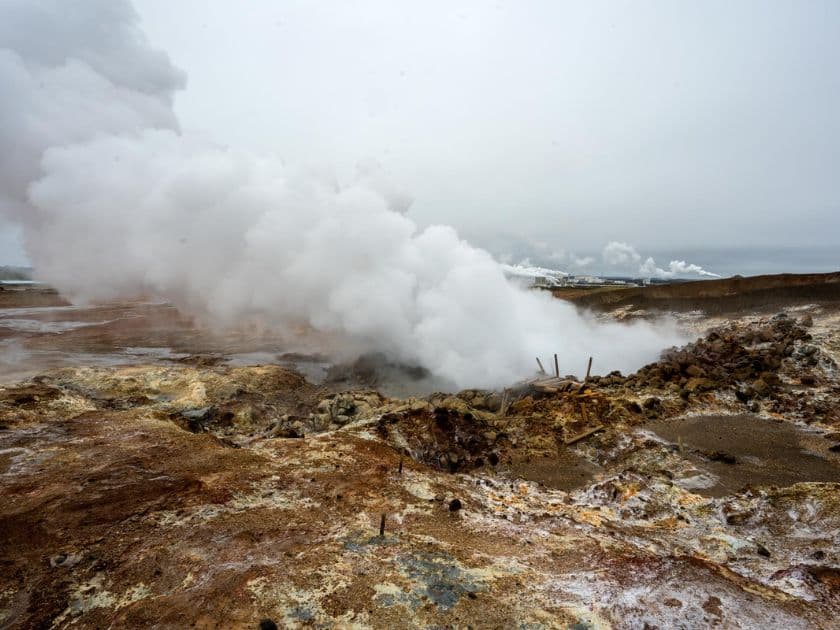
Gunnuhver is an area of mud pools and steam vents on the very tip of the Reykjanes peninsula. The gases spewing from the ground turn the surrounding lava rock into bubbling clay and make the water acidic. Gunnuhver is the largest mud pot in Iceland. The area was named after a local ghost, Gunna, who was said to be causing trouble in the area until a local priest trapped her and she fell into the hot spring some 400 years ago.
Reykjanesviti – The Lighthouse
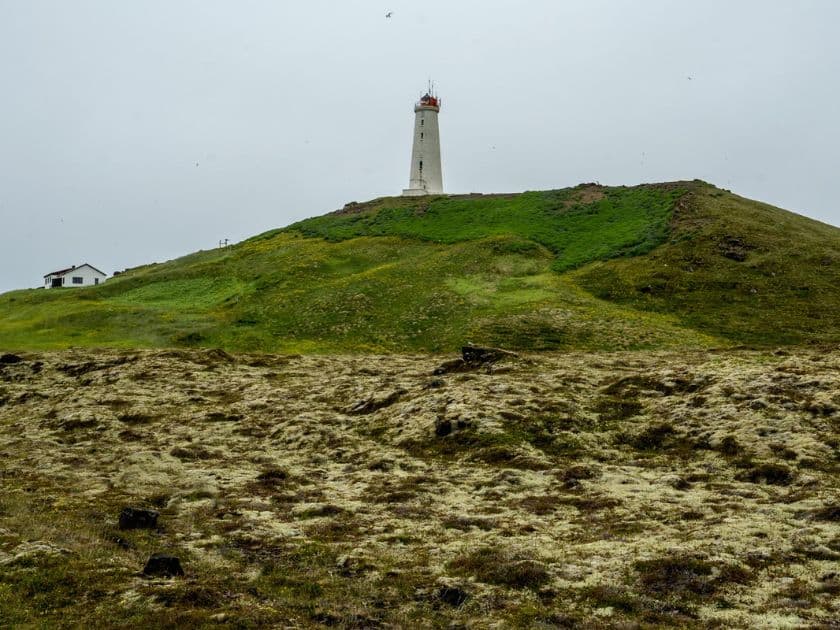
On Reykjanes, there are many lighthouses. Some even say that the lighthouses outnumber the villages. The most famous of them all, as well as the oldest one in Iceland, is Reykjanesviti lighthouse, which stands 29 meters (95 ft) tall and 69 meters (226 ft) above sea level.
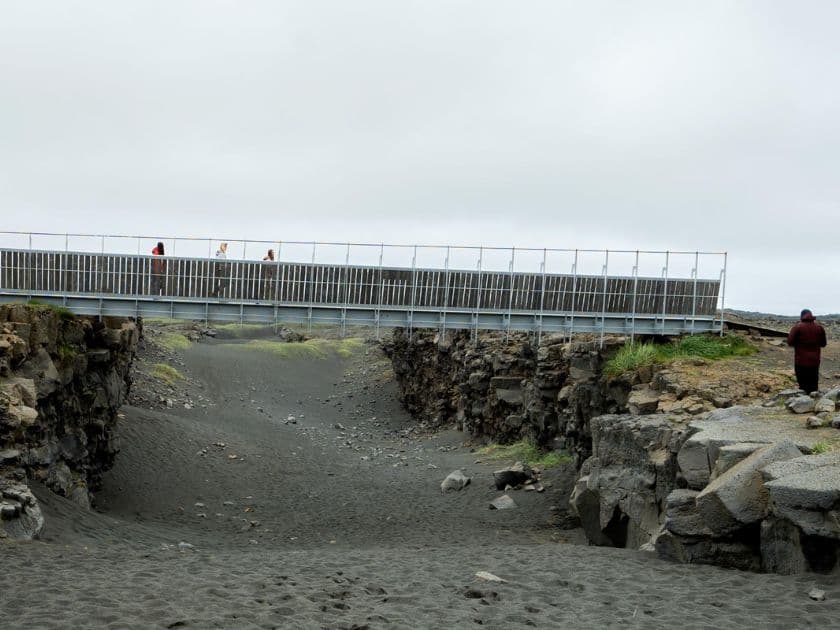
The Bridge Between Continents
The Bridge between Europe and North America is located on the Reykjanes Peninsula. The lava-scarred Reykjanes peninsula lies on one of the world’s major plate boundaries, the Mid-Atlantic Ridge. According to the continental drift theory, the Eurasian and North American tectonic plates are continuously drifting apart, creating great forces beneath the gaping rifts. As the plates diverge, linear fractures known as fissures form due to stresses created by the tension that builds up as the plates move away from each other. The Bridge Between Continents at Sandvík is a small footbridge over a major fissure, providing clear evidence of a diverging plate margin. The bridge was built as a symbol of the connection between Europe and North America.
Things to know
AccessibilityChildren friendly
Fitness levelEasy
Tour languageEnglish
Licence requiredNone
- Operates in different weather conditions, please dress accordingly
Inclusions and Exclusions
✅ Included
- Tour guide
- Pick up and drop off transport
- WIFI onboard
❌ Not included
- Lunch
- Dinner
- Gratuities
Where we'll meet
Meet up/Pick up location: Your selected pickup location
Instruction: Please be ready at your pick up point at the stated time on your booking confirmation. Please allow 30 minutes for us to complete all pick ups. Please select a pick up place close to your location. Most inner city hotels are unavailable due to local law. If your hotel is not listed choose a bus stop. There are various bus stops around the city. When choosing pick up from the drop down menu look under "ports".
ReturnThis trip returns to meeting point.
Your host
This tour is operated by Glaciers and Waterfalls.
Pay securely online. Your tour is operated by our vetted local partner, and Kodama Travel acts as booking agent. We recommend all guests take out comprehensive travel insurance to cover unforeseen delays, cancellations, and medical emergencies.